We’re making Lowfire: a thoughtful home for your conversations, calls and shared moments. Here’s the work, day by day — the new ideas, the fixes and the details in between.
The day so far brought automatic notice when an organisation can send again, Swedish explanations of organisation refusals, another supported desktop text-size step and more consistent spacing. Smaller fixes improve call states, screen-share refreshes, pointer feedback, server cleanup and the reliability of visual checks.
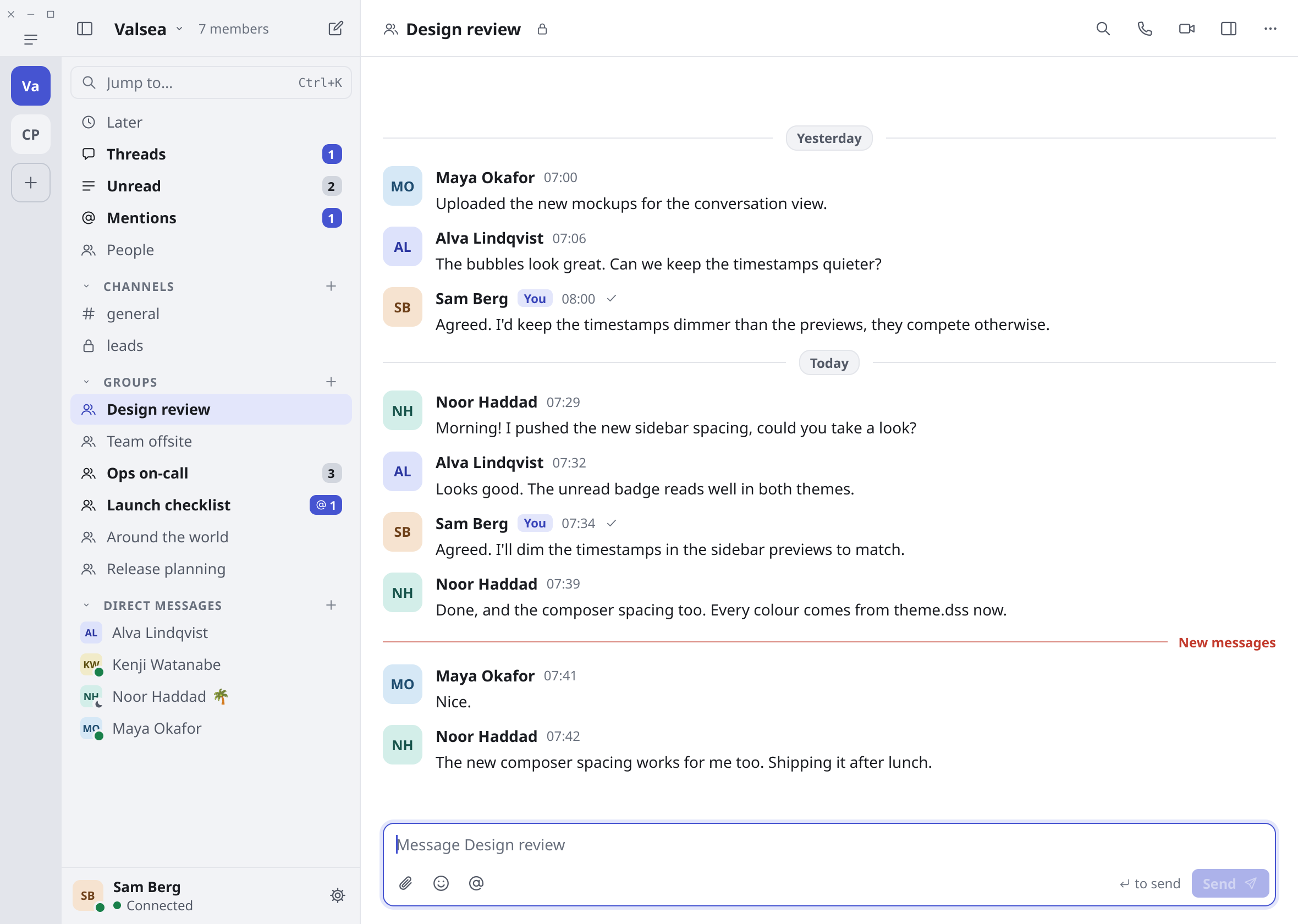
The conversation view in the current development build, with the sidebar and composer close at hand. Linux desktop demo. Captured . Fictional demo content.Read all 10 notes ↗Browse every topic for this day 10
Reading and setup became easier, backups learned to wait for a connection, and Mac video gained a temporary software fallback. Permissions, recovery and private input received substantial attention, while private beta delivery, connected-program controls, Lists and blocking/reporting advanced at clearly stated stages of preparation.
Video calls became more accommodating, recovery kits kept a dependable way back to the last complete backup, and Linux began following the desktop’s text size. The day also brought many fixes to keyboard focus, long names, large-text layouts, notifications and updates, plus an accepted design for replacing an identity key.
Desktop keyboard conventions, text size, picture paste, terminal interaction and video layout improved, with iPhone release tooling and Linux video foundations added.
Full-disk recovery, setup, calls, screen-reader behaviour and large-text layouts received extensive fixes, with release and video plans kept distinct from shipped behaviour.
Protected recovery, encrypted local automation and organisation-directory foundations advanced, alongside lower temporary-memory use and early iPhone work.
The terminal client gained setup and recovery, pictures and files, Vim keys, emoji, notifications, screen-reader line mode and command-line reads. A broad usability pass improved small and large terminal layouts, keyboard focus and organisation switching, alongside Mac call startup and proxy sign-in fixes.
The terminal client gained an interactive shell, shared commands, audio calls and clipboard and link handling. Desktop work added sidebar organisation and Linux updates, while network retries, attachment recovery, search correctness and idle scheduling became more robust.
Notification keywords and quiet hours, encrypted preview pictures and channel bookmarks added everyday controls. Fixes addressed attachment sends, search cleanup, startup work and calls during network changes, while the terminal client gained its executable and update infrastructure.
Threads, message formatting, group mentions, notification choices and pinned messages expanded everyday chat. Work on memory, history storage and network proxies accompanied the first terminal-client building blocks and a shared client runtime.
Small group calls, presence, reusable invitations, message reminders and broadcast-channel controls brought several large pieces together. The day also addressed difficult networks, large histories, recovery and update warnings, while documenting features that remain planned.
Video calls and screen sharing advanced alongside recovery, account setup and stronger organisation boundaries. Smaller changes improved attachment handling, keyboard use, update downloads and explanations when a server refuses something, with extensive reliability and security work underneath.
Chatlet became Lowfire during pre-release development. Calls gained network-change recovery, the shell adapted more gracefully to narrow windows, and security, history sharing, message-order warnings and server administration all advanced; video remained behind a developer-only switch.
Several servers became usable in one desktop client, with account-aware linking, recovery and settings. The day also strengthened delivery, large-group handling, local-history recovery, menus, notifications and attachment memory use, while laying out the next organisation, presence and channel-history work.
The interface moved to flatter message rows, an organisation rail, a redesigned composer and a single search palette. Invite links and private names, the first Linux desktop bridge, file handling, delivery recovery and extensive memory work made this a broad day beyond the visual redesign.
Mac chat became more familiar through hover actions, spellcheck, stronger text editing and readable call records. Work also repaired staged files and device revocation, while video remained a prototype with a separate quality benchmark.
The first working Mac client brought encrypted conversations, organisations, files, device linking, recovery and one-to-one audio calls together. Rich messaging, multilingual text and everyday editing also took shape, while video and the other platforms remained future work.
Lowfire is in development. These notes cover the project’s reviewed changes, grouped into plain-English topics. Pull requests are reviewed changes to the project; the counts also include maintenance and early direct commits. Internal coordination records are accounted for privately.
Designs and foundations are labelled as work in progress. Genuine screenshots show fictional demo content. Current reference captures do not recreate historical builds or imply earlier device availability.
Checked through . The latest day covers work reviewed through the pinned snapshot, not the whole calendar day. The notes were expanded on October 25 to cover the full reviewed history.